Audrey Caro
Hi, I'm Audrey!I'm a skilled storyteller with expertise in journalism, de-jargoning and building connections.I can help you tell your story and share information to create meaningful connections with your audience.Let’s connect and see how we can work together!

Portfolio
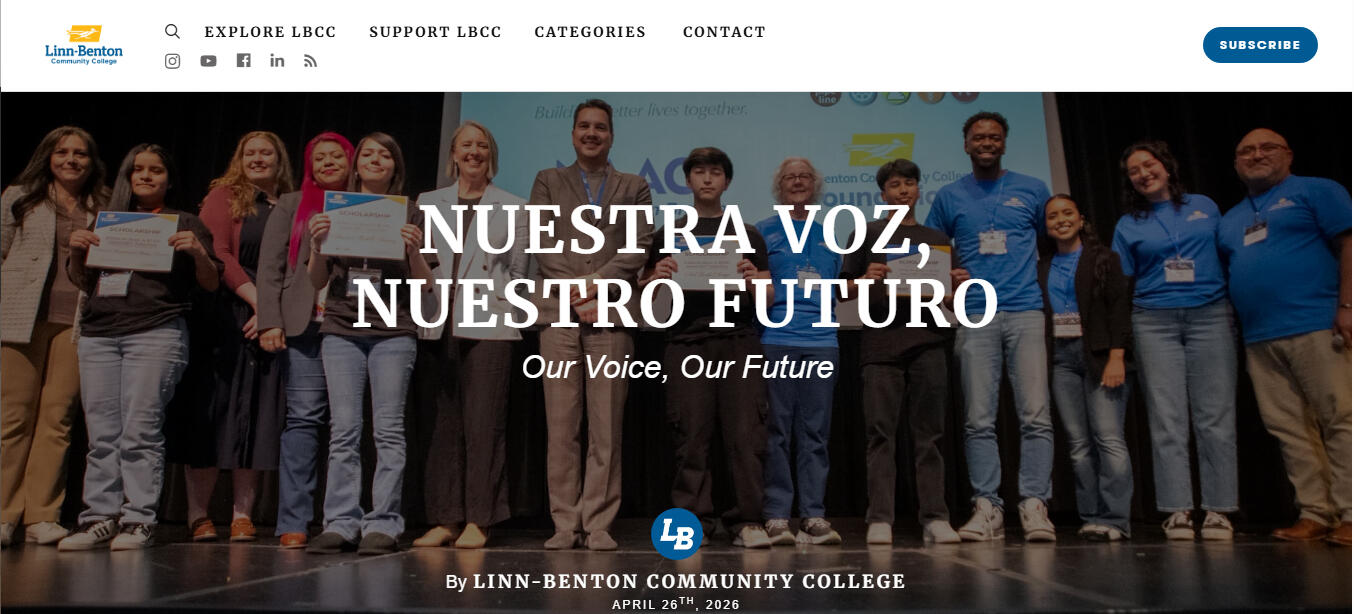
Nuestra Voz, Nuestro Futuro
Our Voice, Our Future
Usually, the stories I write for Linn-Benton Community College focus on a single student, donor or staff member. I love learning about people and sharing their stories.Recently, I got to spend the day at LBCC’s third annual Latine High School Leadership Conference. It was a treat to experience the wisdom and encouragement shared in this community.The story is linked below.
© Audrey Caro. All rights reserved.
Portfolio
Heading North on the PCT
Katie North and Erin Kelley starting out on the trail at Chinook Pass on Aug. 5, 2025.
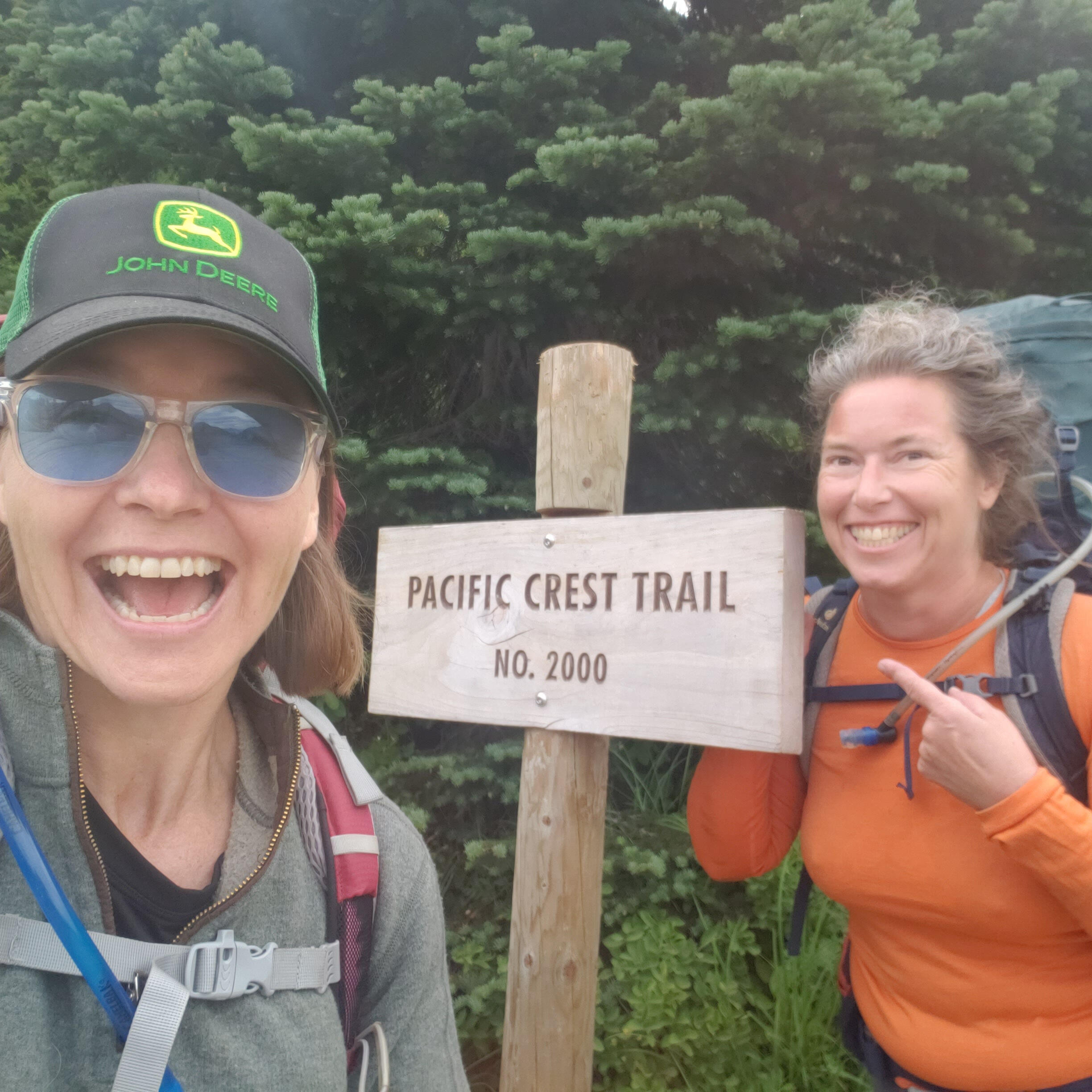
It had been about 10 years since Katie North hiked the Pacific Crest Trail in Oregon when she decided to complete the Washington section.“I had done most of Oregon and about half of Washington, ending at Chinook Pass,” North said. “My cousin (Miranda) and I did a lot of it together. We’d just flip-flop a lot. Shuttled our cars back and forth.”This time, North gave herself about a month to complete the trail in Washington, and most of that was on her own.“It would have been harder to do (in sections) logistically on the trail as well within my time frame,” North said. “I also knew that if I kept breaking it in little pieces, I’d never get it done.”From Aug. 5 to Sept. 11, North traveled the 329 miles from Chinook Pass to the Canadian border and 30.6 miles back to Hart’s Pass.“The next road to cross if you just go north (in Canada) is nine miles,” she said. “You used to be able to walk to that. It was convenient because you didn’t have to walk that far. (Now) people have to walk back to Hart’s Pass because that’s the closest road to get out of there.”On Jan. 27, 2025, the Canadian Border Services Agency issued a statement announcing it “(was) discontinuing the issuance of permits to enter Canada on the Pacific Crest Trail without presenting yourself to a port of entry.”North planned to hike between eight and 12 miles per day, building up her endurance as she progressed and accounting for difficult terrain and heat. Her pace was slower than previous hikes, partly due to a 3-year-old foot injury and party due to her age; she turned 51 in September.While this was mostly a solo journey, a friend joined North the first couple of days, and she met another friend in Snoqualmie Pass at the Summit Inn in mid-August.“On some of the longer sections there was nothing to do but walk,” North said. “I looked at my map, planned out what was ahead for the next day.”Most people use an app, she said, but she didn’t trust her phone.North started preparing just a couple of weeks before she set out. She looked online for meal ideas, supplies, and to get an idea about how much everything would weigh.“You just can’t really train for it because it’s so different when you’re out there actually climbing up hills and going down hills with a pack and all the obstacles,” North said.Still, she didn’t go from sitting on the couch to going on a month-long backpacking trip. She is an experienced and frequent hiker and her day job as a landscaper keeps her physically active.“I was expecting it to be challenging and I wasn’t highly physically prepared,” she said. “I knew from past experience some days were going to be harder than others. It just balances out.”One particularly challenging section had some large fallen trees in the path.“You’re already exhausted from hiking the trail and then you had to climb over the logs,” North said. “That was hard. That and the huckleberries slowed me down. There were so many huckleberries and I needed to eat them all.”Washington experienced several wildfires during the time North was on the trail. She was able to continue but did encounter some smoke in Stehekin.“Then it rained and cleared up and it was beautiful,” North said. “When you got to the top of a summit or pass, I was amazed with all the mountains all around me.”With degrees in horticulture and biology (focusing on wildlife), North had a special appreciation for the plants and animals she encountered along the way. And she saw three bears, but not all at the same time.“One was probably 500 yards away,” she said. “Two were on the trail; the third was the last day when I was getting a ride down the trail.”Meeps of pikas and whistles of marmots greeted her in the rocky areas, and the chirps of chipmunks in forested areas.“They have very distinct habitats,” she said. “I also paid attention to the plants. I would stop and look at the plants and what insects are likely to be in those plants.”The subalpine larches were a welcome site for North.“They’re more on the east side of the mountains,” North said. “They lose their pine needles in the fall. They turn orange and lose their needles. In the spring they are a lot greener and brighter than the other coniferous trees.”She also spotted a lot of Fireweed.
“It’s a plant that will come in after an area has been disturbed by something like a wildfire or volcano erupting,” North said. “A few years later a different type of plant will come when there is more moisture and shade.”Finishing her backpacking adventure was bittersweet for North.“I was excited to be done and out of there, but I knew I’d miss it,” she said.The California section of PCT is on her mind but she has no serious plans to venture out any time soon.“If I don’t get to it, I’m ok with that,” North said. “I’ll probably do little parts here and there.”
Portfolio
Drawing on Family

Tessa Hulls won the Pulitzer Prize for her graphic memoir "Feeding Ghosts."
Story published in the Lifestyle magazine of the Port Townsend & Jefferson County Leader
VOL. 6 | ISSUE NO. 3 | SUMMER 2025
Port Townsend holds a special place in the heart of artist, writer, performer and adventurer Tessa Hulls.It’s where she drew most of her Pulitzer Prizewinning memoir “Feeding Ghosts.”It’s her first book and the first graphic memoir to win in the memoir or autobiography category.“I think it still hasn’t sunk in — it might never sink in — but now that I’m only 90 % in shock instead of 100 %, I’m starting to feel a lot of excitement about the ways that this now means I can get other people past gatekeepers,” Hulls said.In “Feeding Ghosts,” Hulls tells the story of her grandmother, her mother and herself in the context of Chinese history and intergenerational trauma.“I’ve led a really unusual life and so I’ve often found myself in circumstances where something falls into my lap and then I have to decide what to do with it,” Hulls said. “Obviously this is the most powerful skeleton key I’ve ever received. I feel excitement about this really validating the idea of graphic novels holding their own as works of literature and I really want to try to continue to push that for other makers and other voices.”Hulls finds inspiration in different forms of art and encourages everyone to explore outside the genres they work in.“Alison Bechdel’s ‘Fun Home’ was the first graphic novel that really showed me the possibility of the medium,” she said. “But I’ve been so multi-disciplinary that actually what influences me the most is live performance and so it was actually dance that was the first thing that led me into my book.”Being in remote wild places was also critical to her process.“Part of the reason I wanted to make myself available for a Port Townsend article is the landscape of being out on that peninsula was so crucial to why the book became what it was,” said Hulls, who was set to return on July 15 for a public reading as part of Centrum's Port Townsend Writers Conference.She also thinks having Cheryl Strayed, author of “Wild: From Lost to Found on the Pacific Crest Trail,” as one of five jurors on the Pulitzer panel worked in her favor.Hulls observed that much of the response and press coverage about “Feeding Ghosts” has centered on the aspects of intergenerational trauma and Chinese history.“Very few people have honed in on the wilderness side of it,” she said. “I think getting a juror who understands what it means to be changed by an extended time alone in the wilderness definitely allowed for some of the nuances of what I was doing to shine.”
Port Townsend, where she stayed with friend Greg Smart from 2017 to 2022, allowed Hulls the physical and mental space she needed to focus on her work.Smart and Hulls met through a mutual friend, Mary Ann Peters, a Seattle-based artist Hulls shared studio space with.“She knew Tessa needed to get out of town. I had just bought a house in Port Townsend,” Smart said. “She was in and out quite a bit. We are both semi-nomadic.”Thinking the book would take three to five years to finish, Hulls applied for different artist residencies.“I plotted out a plan of everything I was going to need in place to pull that off and basically created the foundations of a career that didn’t exist yet,” Hulls said.She got accepted to all five that she applied to and was away from Port Townsend for about two years fulfilling those commitments.“I didn’t really plan to be gone for that long but that’s why I went on the road,” she said. “Then I went straight into the woods and came back out really knowing the thing I needed to strengthen and recommit to was community and human ties.”That was two months before the COVID-19 pandemic hit.“So that is why I think Port Townsend will always hold a role in my heart of being the loneliest chapter of my life,” Hulls said. “But it also absolutely allowed me to focus on my book in a way that never would have been possible if the world hadn’t disappeared.”She worked out of a friend’s garden shed, riding her bike through Cappy’s Trails to get there.
“Mountain biking through the woods to go sit alone in a shed and draw my crying mother all day — it allowed me an intensity of focus that I think served the story but also pretty much just emotionally devastated me,” Hulls said.Smart admires the work she put into it and the end result.“It’s a pretty impressive work,” Smart said of “Feeding Ghosts.” “And seeing how truly she suffered in making it. It’s pretty impressive to see all the payoff for all that work. It’s an amazing accomplishment.”For her next endeavor, Hulls would like to work as an embedded comics journalist. She wants to avoid “being the freelancer who just parachutes in for something and doesn’t establish meaningful relationships. I want to be part of a team in the long-term ongoing sense.”As part of the Voices of Wilderness Residency, Hulls worked with the Arctic National Wildlife Refuge.“I got to spend nine days pack rafting the marsh fork of the Canning River,” Hulls said. “I got dropped off in the middle of nowhere by bush plane and ended up making them a 15-page comic about why the Arctic National Wildlife Refuge is probably the most contentious piece of land in America. That’s touching on issues of ecology, climate change, native sovereignty, oil rights. So that’s the sort of hornet’s nest I’m interested in kicking.”
Portfolio
Profile: Maricela Xuncax Lazo
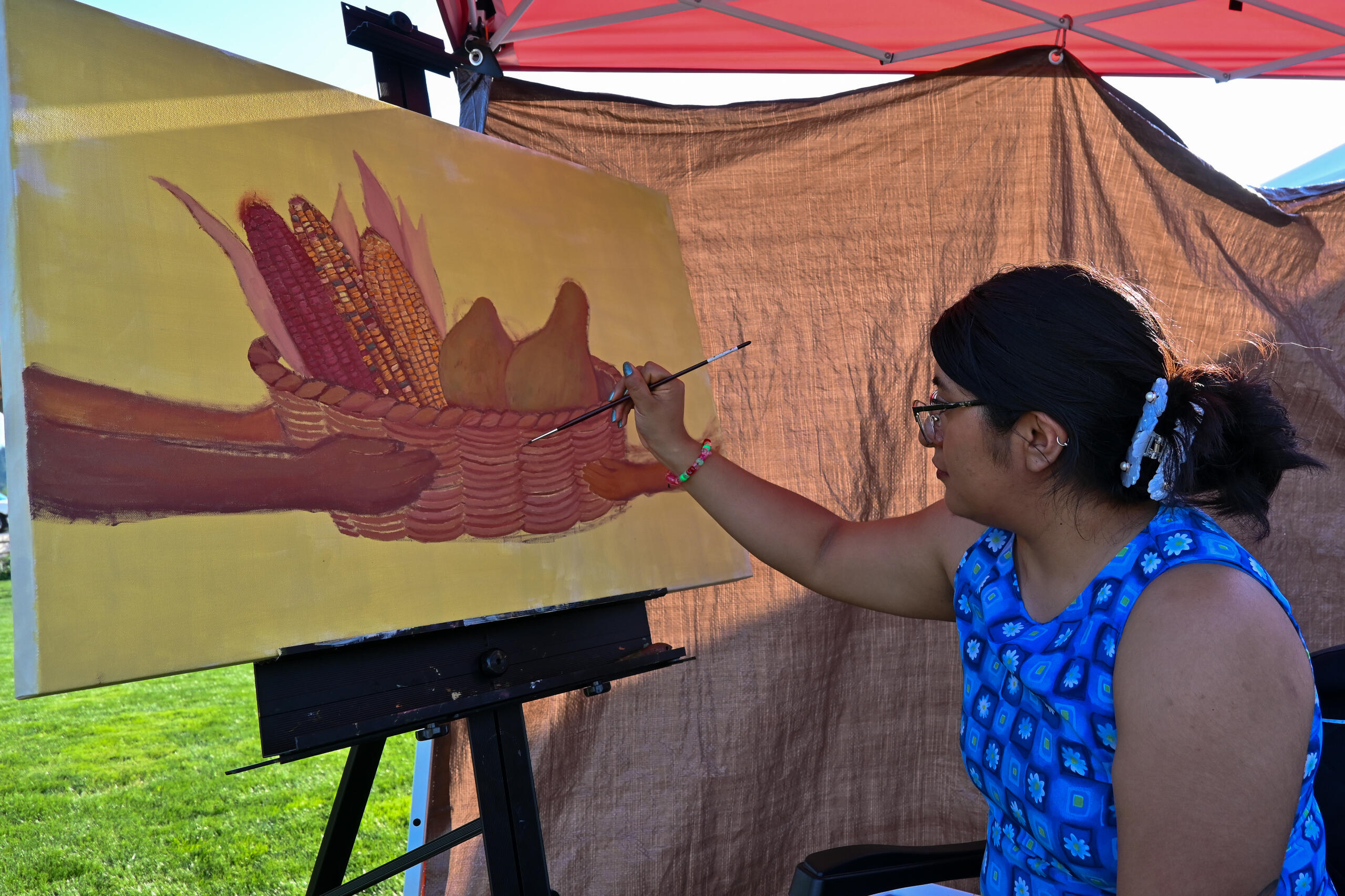
Maricela Xuncax Lazo paints at the Latinos Unidos Siempre Urban Art Fest in Salem, Ore. on Aug. 31, 2024.
Photo by Audrey Caro
Maricela Xuncax Lazo’s first memories of making art are from elementary school. Art-centric afterschool programs provided art supplies and crafting materials that were not easily attainable for someone in a low-income household.“These programs were often volunteer led, and the adults I interacted with would dote on me and encourage me to create essentially what my heart desired,” Xuncax said. “There I learned about scrapbooking, was able to paint, sew my own stuffed animals, and learn how to create quilts.”Family members and teachers often praised Xuncax’s creativity, which gave her the confidence to express herself and her ideas through art despite her shy nature.“I’m very thankful that I was able to have various opportunities in my childhood and adolescence to manipulate and explore so many different mediums,” Xuncax said. “Everything that I create now is due to that early exposure and is able to help me teach myself through experiences while painting.”One of Xuncax’s earliest influences was her mother, who would draw and use her sewing skills to transform and beautify their home.“I have always been a visual person and had been told that I had a grand imagination,” Xuncax said. “My artwork stems from that. Some of my current influences include Monet with his impressionist paintings. I feel like I enjoy painting the most when I paint the world as I perceive it, as opposed to through a rigid/traditional lens.”Xuncax experiences a rollercoaster of emotions when she creates.“Growing up I was used to not struggling much with learning,” she said. “Now as an adult, I try to put myself in situations where I can feel challenged, to have a healthy sense of frustration.”Often when she begins a painting, Xuncax feels a sense of lingering anxiousness about whether she can accurately represent or convey the images in her head through the medium of paint.“The hardest part is always getting started,” Xuncax said. “Other times I feel frustrated when I come across challenges, such as the paint or medium not acting the way I thought it would, or my colors not coming out right. The wonderful thing about paint is how easy it is to wipe off or to paint over. The most satisfying part of painting is when you’ve finally trusted the process and begin to see the fruits of your labor. When everything is finally coming together, I feel so elated.”Xuncax loves hearing people’s interpretations of her artwork.“By listening to others, I broaden my own perspectives,” she said. “I want people to connect and to feel nostalgic when they see my work. I hope that people can feel what I feel when creating these pieces.”~
Maricela Xuncax Lazo is a multimedia Latine artist based in Beaverton, Oregon. Themes consist of celebrating her Guatemalan, Mexican, American family histories and cultures. Many of her works also incorporate florals and magical realism, and reflect her perspectives and lens of the world as child. She loves to create with her younger siblings and creating mini foods out of polymer clay is among their favorite activities.
Profile: Kindred Chords
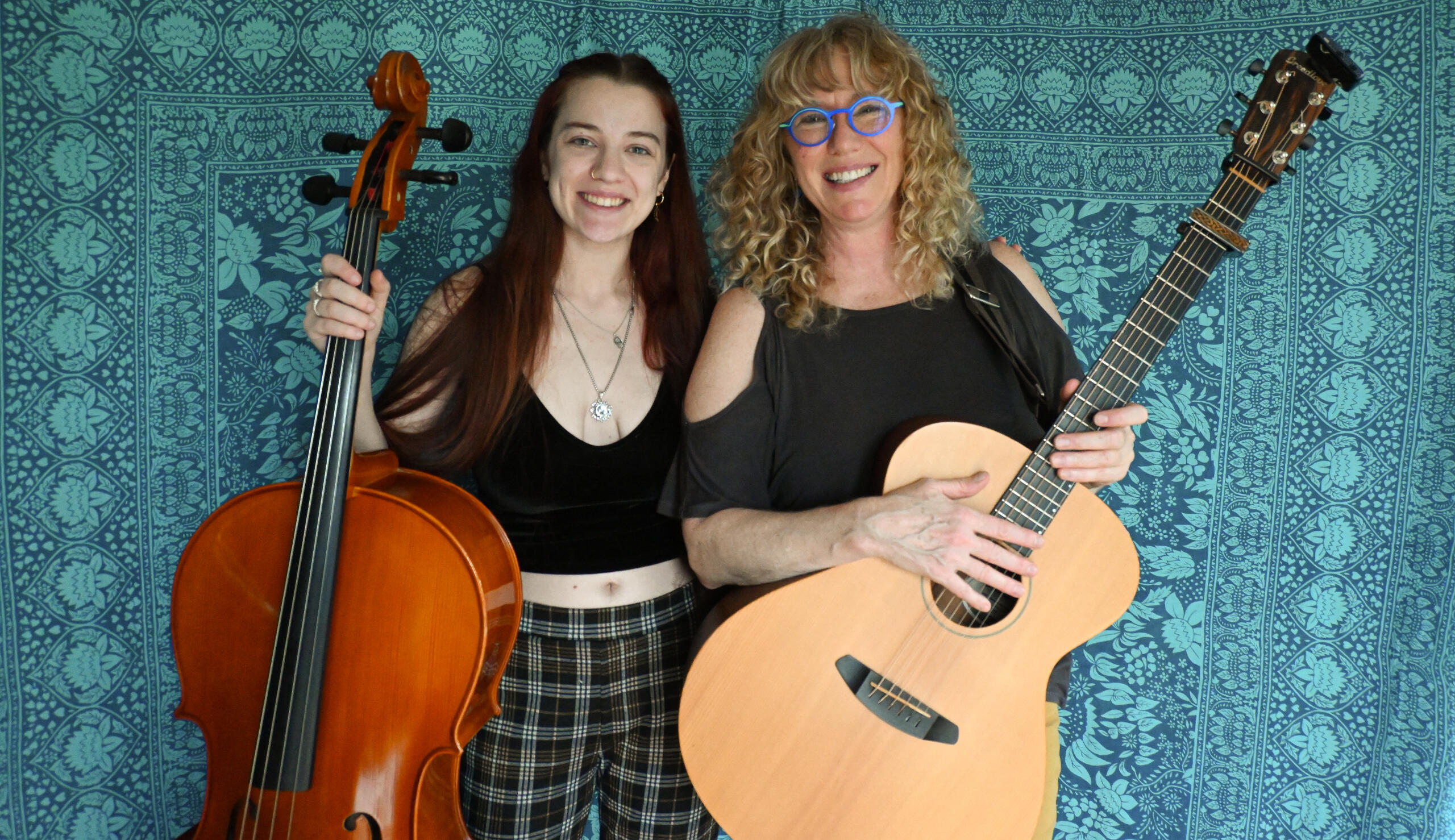
Eliza Naomi and Stacy Henle perform together as Kindred Chords.
Photo by Audrey Caro
Music has been a constant presence in the lives of Stacy Henle and Eliza Naomi and they’re excited to share their collaboration, Kindred Chords, with audiences in Oregon and beyond.Henle and Naomi connected at a recent Songwriter Soiree retreat in Portland.“She’s amazing,” Henle said. “Eliza can just pick up and bring beauty and loveliness and harmonies to any song. I’m just over the moon about this partnership.”The duo plays original indie-folk music, blending their vocal harmonies.They both grew up in musical families and are multi-instrumentalists. As Kindred Chords, Henle plays guitar and Naomi plays cello.While they enjoy playing in a variety of venues, house concerts offer a distinct intimacy with minimal distractions.“People are there to listen,” Henle said. “That’s the purpose of going – to listen to music. It’s like in the olden days. I keep thinking of castles and royalty and they would bring the musicians in.”Naomi hopes her music and lyrics resonate with people.“All my stuff is kind of slow and sad, which I think is important,” Naomi said. “People can really relate to them, even the really niche ones. I also have a mix of some crowd pleasers. Some fun, upbeat stuff that gets people to want to dance.”Henle likes to write lyrics that help people think and grow.“I think for our own tingles on the own backs of our necks, once we have those, that just transfers to other people,” Henle said.
About
I enjoy helping my clients share their stories and make meaningful connections with their audiences.In my 10 years as a journalist working for community newspapers, I learned how to tell people’s stories and make complex information accessible.I earned a Bachelor of Science degree, with an emphasis on digital communication, and an Associate of Science degree in journalism.For fun, I like to make things, take photos and experience art in all its forms.